
A merchant account is a core building block for your business, enabling you to get paid for goods or services you sell.
Getting your new business up and running
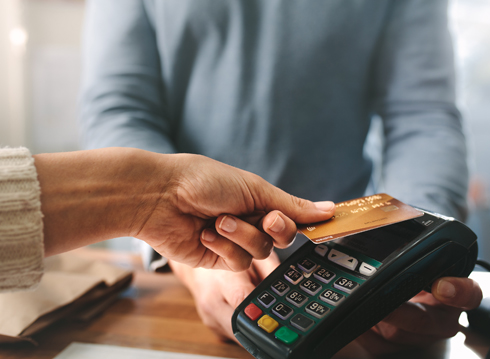
If you’re starting an eCommerce business, you’ve probably put a lot of thought into the customer-facing website that showcases your products or services and the shopping cart that lets customers pay for their purchases. Similarly, if you intend to sell in person, you’ll be setting up a physical store, stand, or stall to display your goods, along with point-of-sale (PoS) capability so that customers can pay, making a merchant account business setup crucial for seamless transactions.
But it’s important to know that, no matter how you’ll be selling, you need a merchant account when starting your business.
This blog explains what a merchant account is, what it’s for, and how to set one up.
What is a merchant account and why do I need one?
A merchant account is an integral part of the payment infrastructure. It’s a special type of bank account that acts as an intermediary between your customers’ bank accounts and your own business bank account.
So, unless you plan to run your business entirely on cash, you’ll need a merchant account to accept payments made using:
- Debit and credit cards, eChecks, and digital wallets (online sales)
- PoS terminals and mobile devices (in-person sales)
How a merchant account helps your business get paid
Your merchant account connects to your payment gateway so that your business can get paid for the goods or services it sells.
Your payment gateway processes all the incoming payments from your customers. For each payment transaction, the gateway:
- Checks if the customer has sufficient funds in their account
- Authorizes the purchase if there’s enough money to pay for it
- Puts a hold on the money while you deliver the goods or services to the customer
- Moves the money from the customers’ account into your merchant account
Your merchant account then:
- Holds the money until the customer payment is complete
- Transfers the money to your business account to finalize the transaction
How do I get a merchant account?
When you start your business, you need to apply for a merchant account. There are two options for doing this:
- With an acquiring bank (also known as an acquirer)
- With your payment provider (the provider of your payment gateway)
When you apply for a merchant account, the underwriter will consider a range of factors, including your industry, your processing history (if any), your personal credit, and the creditworthiness of your business.
An acquiring bank may offer lower fees for high sales volumes, but the application process tends to be longer, even taking several weeks. With a payment provider like Authorize.net, on the other hand, the process is generally faster, and you’ll usually be offered a simpler pricing structure and a more flexible contract.
Everything you need to start accepting payments
As a payment provider, Authorize.net offers an all-in-one plan to help you get set up with both a merchant account and a payment gateway, backed by 24/7 live support. And it grows with your business, allowing you to add products and features as your needs evolve.
Disclaimer: Case studies, comparisons, statistics, research, and recommendations are provided “AS IS” and intended for informational purposes only and should not be relied upon for operational, marketing, legal, technical, tax, financial or other advice. Visa neither makes any warranty or representation as to the completeness or accuracy of the information within this document, nor assumes any liability or responsibility that may result from reliance on such information. The information contained herein is not intended as investment or legal advice, and readers are encouraged to seek the advice of a competent professional where such advice is required.